
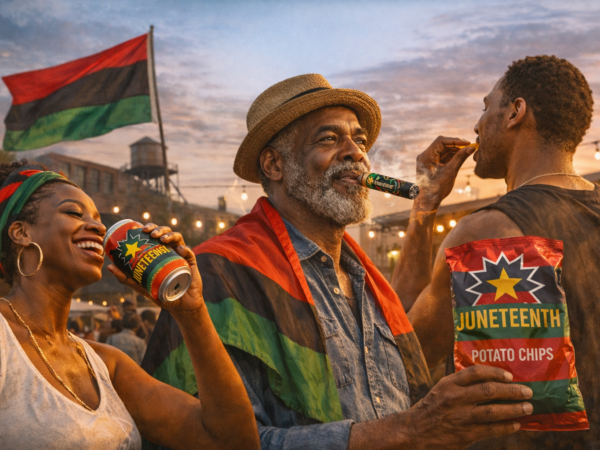
Juneteenth Is Not Just a Celebration
For Black folks, Juneteenth doesn’t land like most holidays. It carries weight. It stirs memory. It can feel meaningful and hollow at the same time.
That’s not contradiction—that’s truth.
Juneteenth marks a moment when freedom was announced, not created. When people were told they were free long after freedom was legally decided. That gap matters. It points to something Black people have always known: freedom on paper and freedom in the body are not the same thing.
So when Juneteenth becomes a party, a brand moment, or a checklist of events, many of us feel uneasy—not because joy is wrong, but because joy without grounding can feel like reenactment.
Our bodies remember what history tries to simplify.
For generations, Black life has required vigilance. Loud celebration, alcohol, music, and spectacle have often been how we access joy safely—how we release what couldn’t be spoken. There is nothing wrong with that. But it’s worth asking whether our celebrations are nourishing us or numbing us.
The deeper question Juneteenth invites is not how do we celebrate, but:
What does freedom actually feel like in the body?
Freedom is not something the state can give. It’s not something a holiday can finalize. It shows up as self-possession—being able to choose what supports your nervous system, your dignity, and your aliveness.
When freedom is looked for outside ourselves, expression becomes performative. We celebrate because it’s expected. We consume because it’s offered. We reenact because we haven’t been shown another way.
But Juneteenth holds the possibility of something else.
It can be a moment of reflection instead of excess. A pause instead of a performance. A chance to ask whether we’re still using the tools of survival—numbing, overdoing, bracing—when we might be ready for something more spacious.
This isn’t about rejecting joy. It’s about maturing it.
There’s a difference between joy that releases and joy that recovers. Between celebration that restores and celebration that leaves us depleted the next day. Our bodies know the difference.
For Black people, freedom has always required internal work. Many of our ancestors were legally freed but psychologically bound—because no one taught them how to live differently, how to rest, how to choose themselves without fear. That inheritance didn’t disappear. It lives on in how we gather, spend, celebrate, and cope.
Juneteenth asks us to notice that—not with shame, but with honesty.
Real freedom doesn’t announce itself. It feels like ease. Like choice. Like not needing to prove anything. It looks like joy that doesn’t need permission or escalation. Like culture that comes from creativity instead of reaction.
Juneteenth, at its best, isn’t a performance of freedom—it’s a practice. A moment to stop reenacting the moment we were told we were free and start living as if we already are.
Not loudly.
Not perfectly. But deliberately.
Synthesized by Matt Sherman from group conversations that took place on “The Ality Check” podcast via the erosplatform.com

 Get access to the monthly Rehumanization Magazine featuring contributors from the front lines of this effort—those living on Death Row, residents of the largest women’s prison in the world, renowned ecologists, the food insecure, and veteran correctional officers alike.